The Amesbury Archer
The area where the Amesbury Archer was found had been excavated in advance of the construction of a big housing estate. His grave and that of his ‘Companion’ (again visit http://www.wessexarch.co.uk) were located at the edge of what was to become the playing field of a school. The building was almost finished when I had a call from its soon to be head teacher. She asked me to paint my image of the Archer, life size, on the wall of the entrance hall. It was to be the Amesbury Archer Primary School.
I finished my mural just before the children began to arrive and was invited to the grand opening of the school, performed by my old friend Phil Harding of Wessex Archaeology and Time Team.
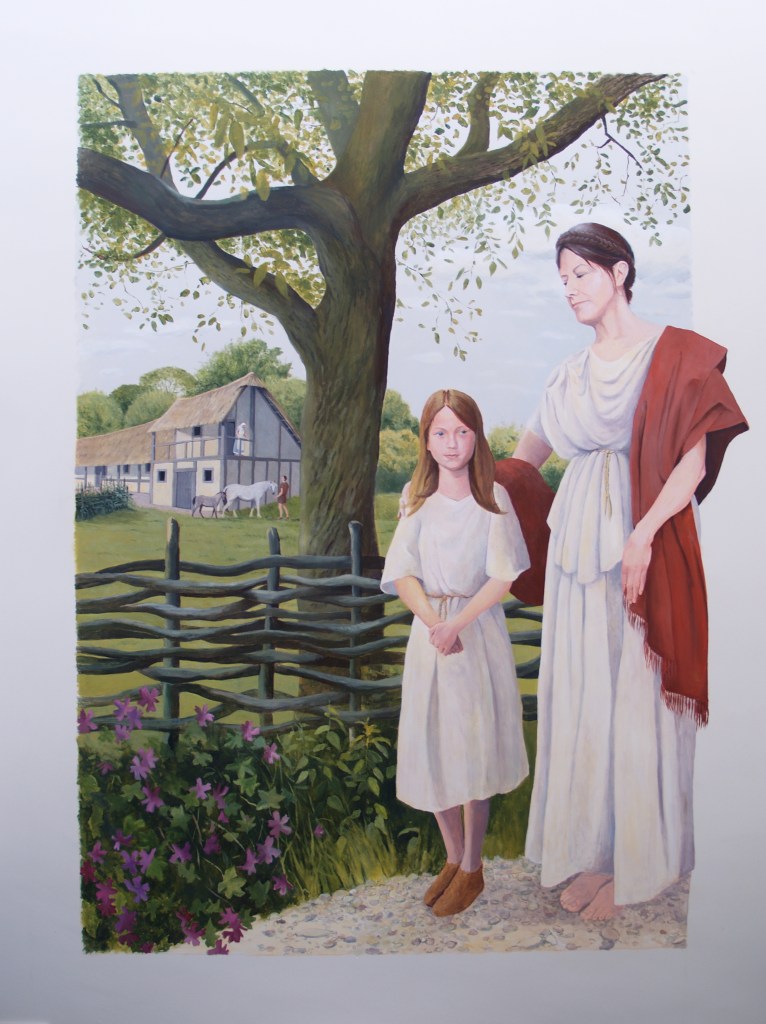
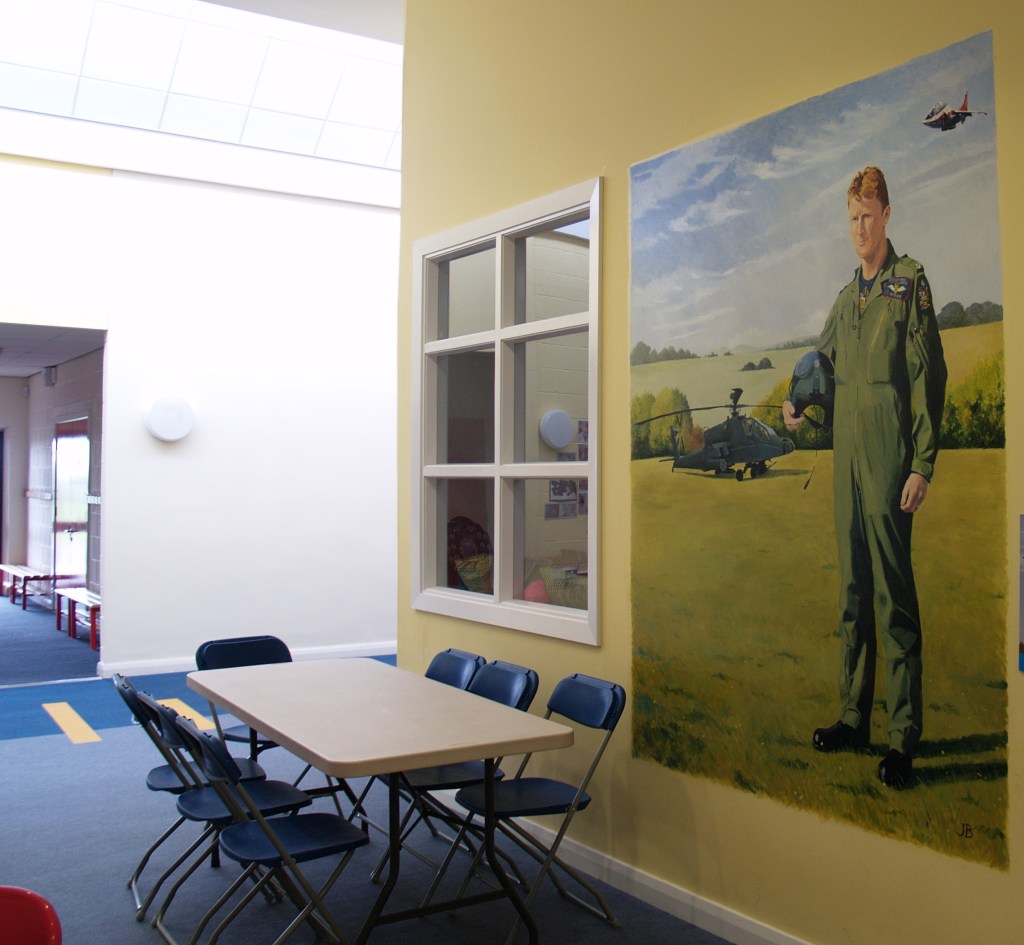
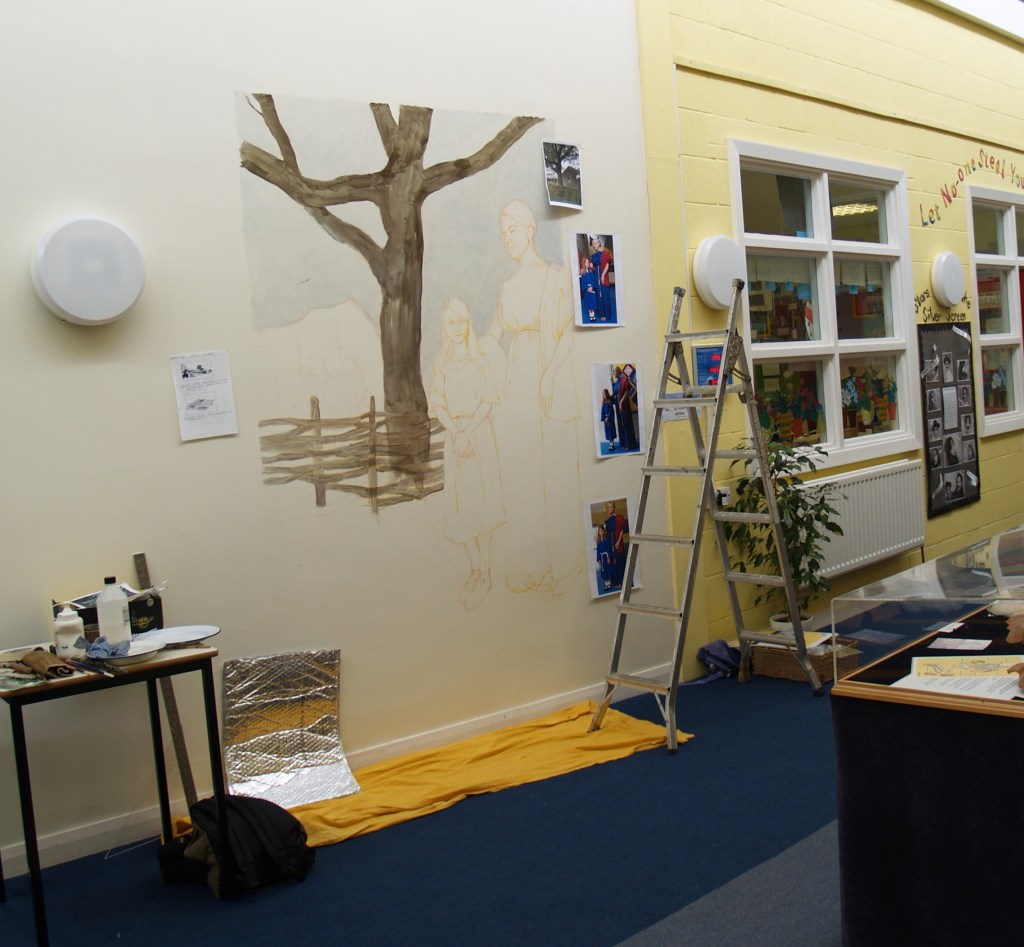
I’ve since made two more murals for the school, the most recent depicting a Romano-British woman and child found in a cemetery of that date, now under the school’s playing field, the other of an Army test pilot from nearby Boscombe Down Air Base. My model on that occasion was Major Tim Peake, who went on to become an astronaut with the European Space Programme!
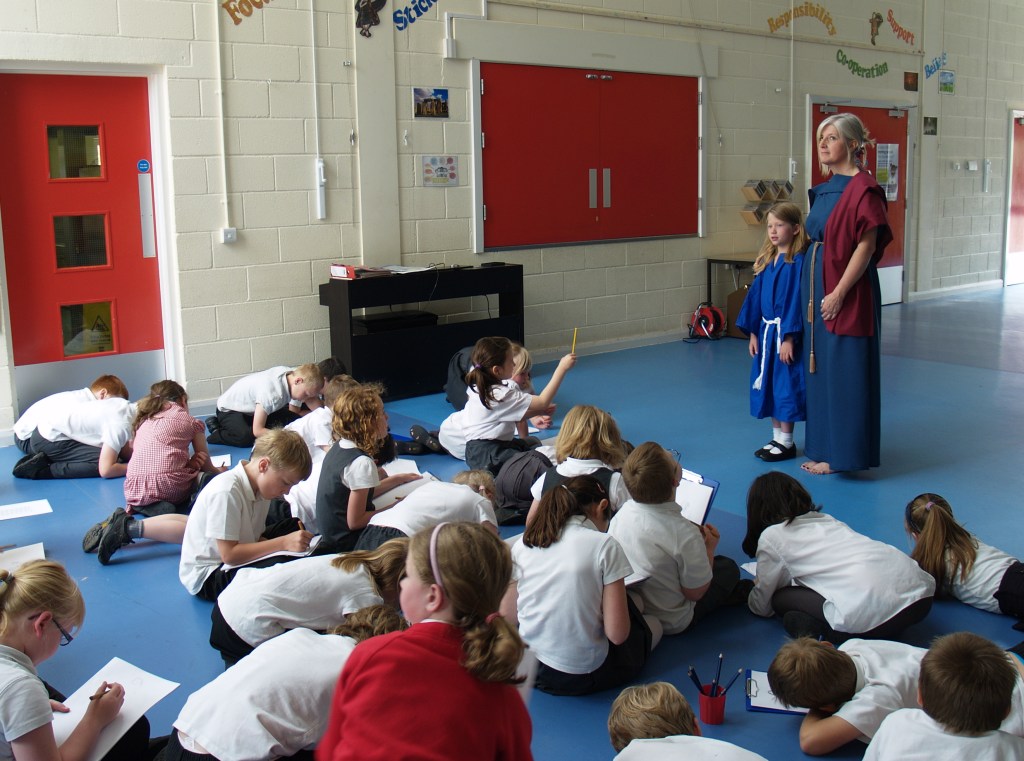
Children at the school making their own drawings (with a bit of help from me) of two brave volunteer models.
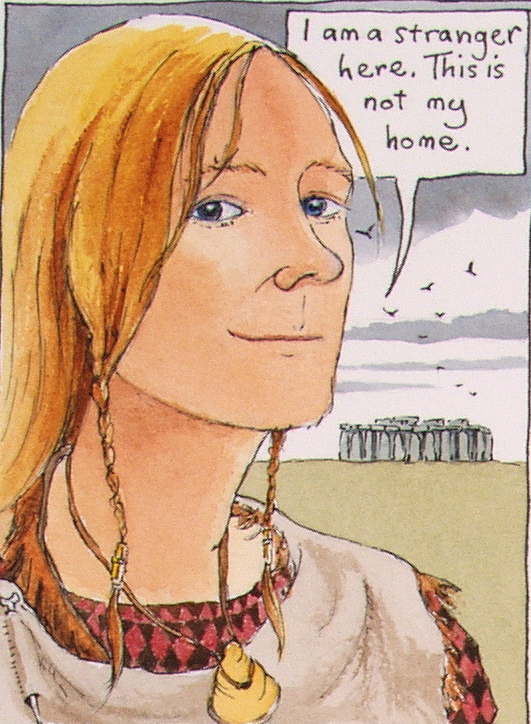
I’d never attempted to write a book before before – let alone one which would take shape as a graphic novel… Only slightly daunted (if only I’d known what lay ahead!) I ‘phoned Andrew Fitzpatrick. My memory of that call to Andrew is that it lasted most of the morning. He was excited by my idea and instantly supportive. He began to share some of the exciting ideas which were developing out of his research (unpublished at that stage).
I put the phone down thinking – I might just be able to do this…
Andrew suggested I should talk to Professor Richard Harrison, who back in 1970s, had written what is still the only book specifically about the Beaker People – The Beaker Folk, pub. Thames & Hudson. His interest lay with the pan – European nature of the Beaker phenomenon, which first appeared (in the shape of burials with a distinctive ‘package’ of grave goods) around 2500 BC, spread rapidly to many parts of the continent and lasted around 500 to 800 years.
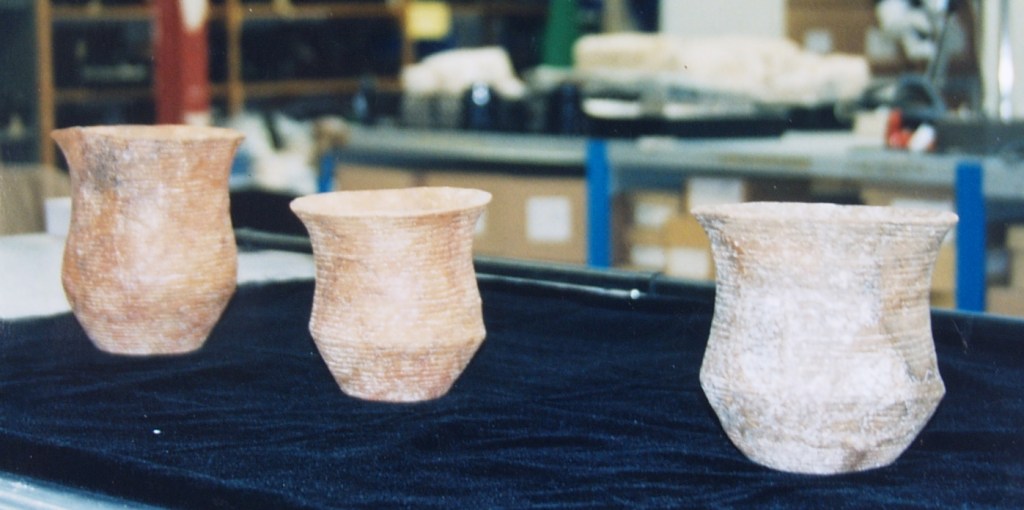
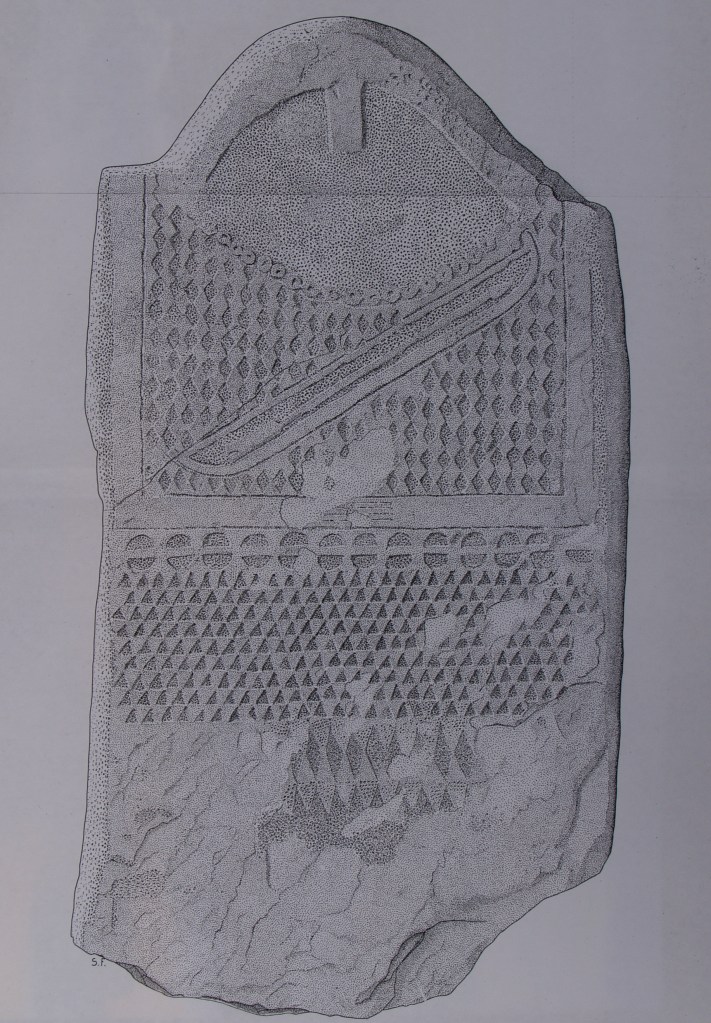
Richard and a colleague from Bristol University, Dr Volker Heyde, had recently published a paper on certain aspects of the Beaker People (elsewhere in Europe the pots are known as Bell Beakers). Their starting point was a cemetery of Bell Beaker date, excavated at Sion in the Upper Rhone Valley, where stand, or stood, a group of anthropomorphic stones, known as stelae.
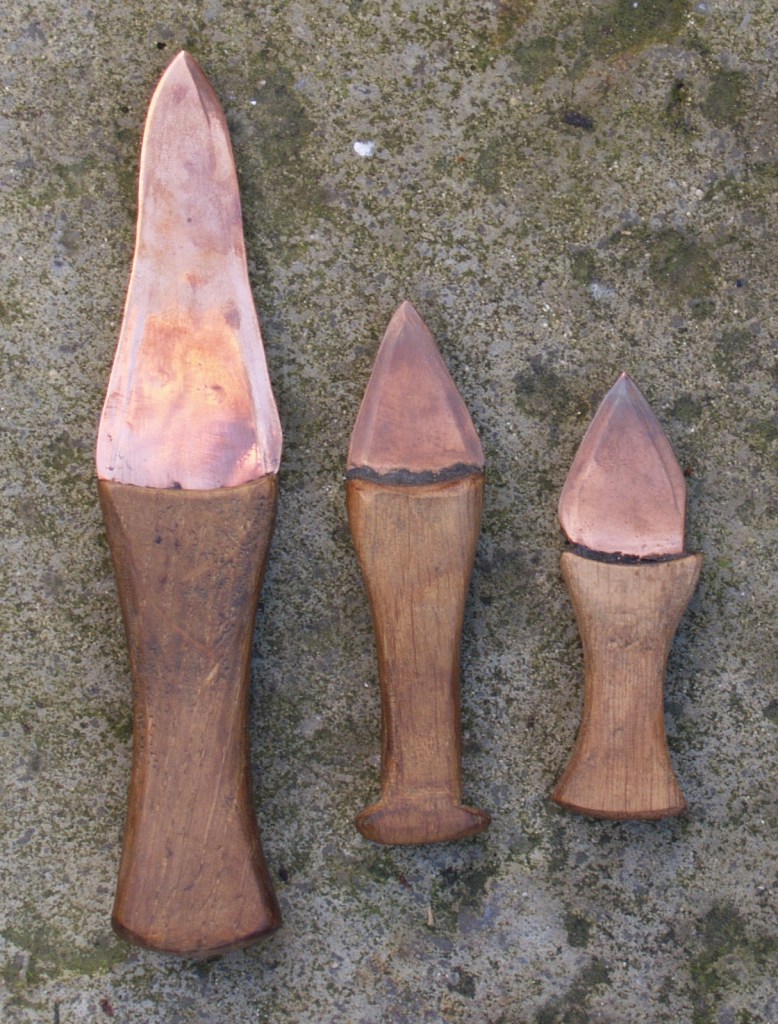
http://www.bronze-age-craft.com
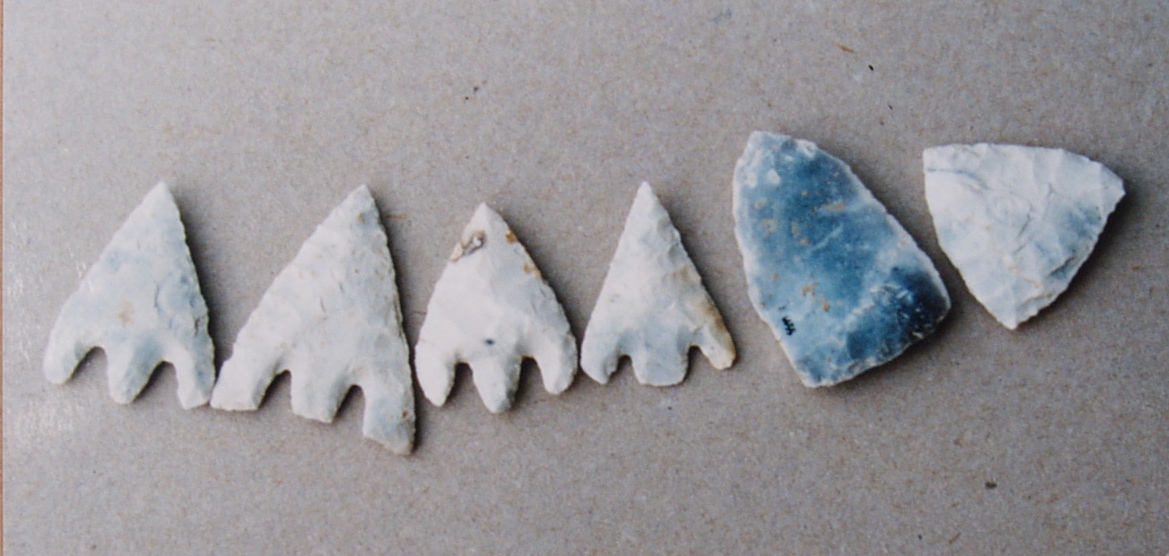
Other stelae show knives or daggers resembling the copper weapons found in Bell Beaker graves all over Europe; some just like the Archer’s.
The detail of the clothing shown on the stelae is extraordinary. All wear highly patterned garments and decorated belts. Many of the patterns are reminiscent of those on beaker pots. Some individuals have sporran-like bags hanging from their belts and many wear necklaces. Some of these are made up from round beads, some have decorated plaques (both perhaps carved from Amber, though copper beads have also been found with burials) and others take the form of lunulae – moon shapes. Were the people remembered on these stones the elite men and women of a Beaker making community?
 Archer, Journey to Stonehenge